淺談Java中File文件的創(chuàng)建以及讀寫(xiě)
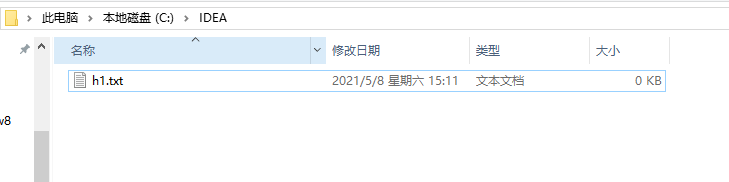
@Test public void test6() throws IOException {File file1 = new File('C:IDEAh1.txt');if(!file1.exists()){//文件不存在 file1.createNewFile(); System.out.println('創(chuàng)建成功');}else{//文件存在 file1.delete(); System.out.println('刪除成功');} }
輸出

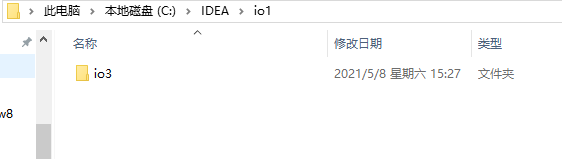
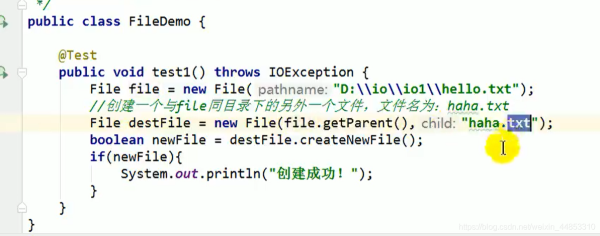
file.mkdir,不會(huì)幫你創(chuàng)建上層目錄 file.mkdirs,會(huì)幫你創(chuàng)建上層目錄
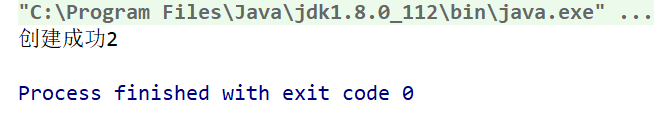
@Test public void test7(){//創(chuàng)建文件夾,mkdir,不會(huì)幫你創(chuàng)建上層目錄File file1 = new File('c:IDEAio2');boolean mkdir =file1.mkdir();if(mkdir){ System.out.println('創(chuàng)建成功1');} //創(chuàng)建文件夾,mkdirs,會(huì)幫你創(chuàng)建上層目錄File file2 = new File('c:IDEAio1io3');boolean mkdirs =file2.mkdirs();if(mkdirs){ System.out.println('創(chuàng)建成功2');} }
輸出
@Test public void test8(){//刪除文件或空文件夾File file1 = new File('c:IDEAh1.txt'); file1.delete(); }5.遞歸刪除所有文件(包括子文件)
//遞歸函數(shù)刪除所有文件 private boolean deletedir(File dir){if (dir.isDirectory()) { File[] files = dir.listFiles(); //遞歸刪除目錄中的子目錄下 for (File f:files) {boolean success = deletedir(f);if (!success) { return false;} }}// 目錄此時(shí)為空,可以刪除return dir.delete(); } @Test public void test8() {File dir = new File('c:IDEA');System.out.println(deletedir(dir)); }
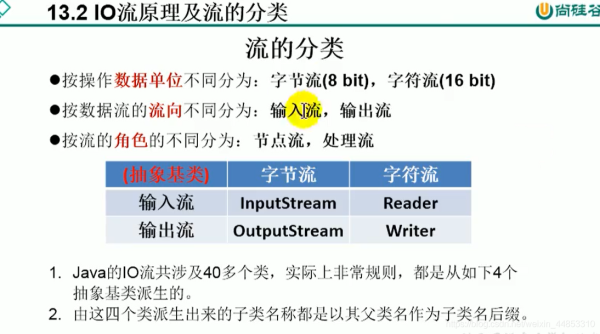
1.對(duì)于文本文件(.txt,.java,.c,.cpp),使用字符流處理
2.對(duì)于非文本文件(.jpg,.mp3,.mp4,.avi,.doc,.ppt)使用字節(jié)流處理
6.讀取txt文件內(nèi)容,流操作要用try-catch(字符流)@Testpublic void test9() { FileReader fr = null;//自動(dòng)補(bǔ)的 try {//1.實(shí)例化File類(lèi)的對(duì)象,指明要操作的文件File file1 = new File('c:IDEAhello.txt');file1.createNewFile();//要拋出異常//2.提供具體的流fr = new FileReader(file1);//3.數(shù)據(jù)的讀入//read():返回讀入的一個(gè)字符,如果達(dá)到文件末尾,返回-1int data = fr.read();while(data!=-1){ System.out.print((char)data); data = fr.read();} } catch (IOException e) {e.printStackTrace(); }finally {try { //4.流的關(guān)閉操作 if(fr!=null)//防止沒(méi)有實(shí)例化成功,避免空指針異常fr.close();} catch (IOException e) { e.printStackTrace();} }

要記得關(guān)閉,因?yàn)槲锢磉B接JVM垃圾回收機(jī)制不會(huì)自動(dòng)回收,要手動(dòng)關(guān)閉。
7.讀取文件內(nèi)容升級(jí)方法(字符流)@Test public void test1() {FileReader fr = null;try { //1.File類(lèi)的實(shí)例化 File file = new File('hello.txt'); //2.FileReader流的實(shí)例化 fr = new FileReader(file); //3.讀入的操作 //read(char[] cbuf):返回每次讀入cbuf數(shù)組中的字符的個(gè)數(shù)。如果達(dá)到文件末尾,返回-1 char[] cbuf = new char[5]; int len; while ((len = fr.read(cbuf)) != -1) {//錯(cuò)誤的寫(xiě)法//for(int i=0;i<cbuf.length;i++{// System.out.println(cbuf[i]);//} //正確的寫(xiě)法for (int i = 0; i < len; i++) { System.out.println(cbuf[i]);} }} catch (IOException e) { e.printStackTrace();} finally { if (fr != null)try { //4.資源的關(guān)閉 fr.close();} catch (IOException e) { e.printStackTrace();}} }
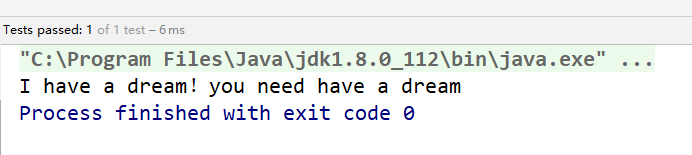
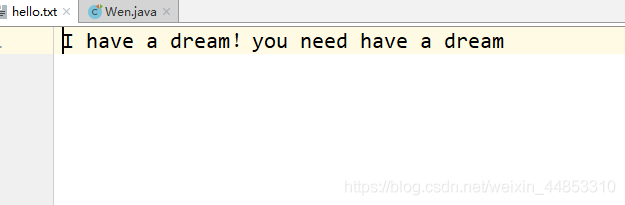
@Test public void test2() throws IOException{//File對(duì)應(yīng)的硬盤(pán)中的文件// 如果不存在,在輸出的過(guò)程中,會(huì)自動(dòng)創(chuàng)建此文件//1.提供File類(lèi)的對(duì)象,指明寫(xiě)出到的文件FileWriter fw = null;try { File file = new File('hello.txt'); //2.提供FileWriter的對(duì)象,用于數(shù)據(jù)的寫(xiě)出 //FileWriter(file,append)第二個(gè)參數(shù),append是true則在后面添加,是false就覆蓋 fw = new FileWriter(file,true); //3.寫(xiě)出的操作 fw.write('I have a dream!'); fw.write('you need have a dream');} catch (IOException e) { e.printStackTrace();} finally { try {if(fw!=null)//4.流資源的關(guān)閉fw.close(); } catch (IOException e) {e.printStackTrace(); }}}
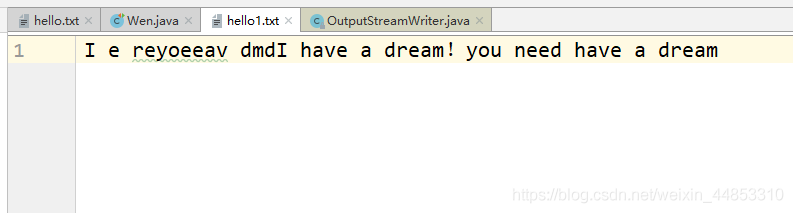
@Test public void test3(){FileReader fr = null;FileWriter fw = null;try { // 1.創(chuàng)建File類(lèi)的對(duì)象,指明讀入和寫(xiě)出的文件 File src = new File('hello.txt'); File des = new File('hello1.txt'); // 2.創(chuàng)建輸入輸出流的對(duì)象 fr = new FileReader(src); fw = new FileWriter(des,true);//不覆蓋 // 3.數(shù)據(jù)的讀入和寫(xiě)出操作 char[] cbuf = new char[5]; int len; while((len = fr.read(cbuf))!=-1){//每次寫(xiě)出len個(gè)字符fw.write(cbuf,0,len);//從cbuf的0號(hào)位開(kāi)始寫(xiě)入len個(gè)字符 }} catch (IOException e) { e.printStackTrace();} finally { try {// 4.關(guān)閉流資源1fw.close(); } catch (IOException e) {e.printStackTrace(); } try {// 4.關(guān)閉流資源2fr.close(); } catch (IOException e) {e.printStackTrace(); }} }
@Test public void test4(){FileInputStream fis=null;FileOutputStream fos=null;try { //1.造文件 File src = new File('b.jpg'); File des = new File('c.jpg'); //2.造流 fis = new FileInputStream(src); fos = new FileOutputStream(des); //3.讀數(shù)據(jù),存數(shù)據(jù) byte[] buffer = new byte[5]; int len;//記錄每次讀取的字節(jié)的個(gè)數(shù) while((len = fis.read(buffer))!=-1){fos.write(buffer,0,len); }} catch (IOException e) { e.printStackTrace();} finally { if(fos!=null) {try { //4.關(guān)閉資源 fos.close();} catch (IOException e) { e.printStackTrace();} } if(fis!=null) {try { //4.關(guān)閉資源 fis.close();} catch (IOException e) { e.printStackTrace();} }} }

@Test public void test5(){BufferedInputStream bis = null;BufferedOutputStream bos = null;try { //1.造文件 File src = new File('b.jpg'); File des = new File('d.jpg'); //2.造流 //2.1造節(jié)點(diǎn)流 FileInputStream fis = new FileInputStream(src); FileOutputStream fos = new FileOutputStream(des); //2.2造緩沖流 bis = new BufferedInputStream(fis); bos = new BufferedOutputStream(fos); //3.復(fù)制的細(xì)節(jié):讀取,寫(xiě)入 byte[] buffer =new byte[10]; int len; while((len=bis.read(buffer))!=-1){bos.write(buffer,0,len); }} catch (IOException e) { e.printStackTrace();} finally { //4.資源關(guān)閉 //要求,先關(guān)閉外層的流,再關(guān)閉內(nèi)層的流 if(bos!=null){try { bos.close();} catch (IOException e) { e.printStackTrace();} } if(bis!=null){try { bis.close();} catch (IOException e) { e.printStackTrace();} } //說(shuō)明:關(guān)閉外層流的同時(shí),內(nèi)層自動(dòng)關(guān)閉,所以外層關(guān)閉可以省略 //fos.close(); //fis.close();} }
用緩沖流快了很多

經(jīng)典步驟:
1.創(chuàng)建File類(lèi)的對(duì)象,指明讀入和寫(xiě)出的文件
2.創(chuàng)建輸入輸出流的對(duì)象
3.數(shù)據(jù)的讀入和寫(xiě)出操作
4.關(guān)閉流資源
到此這篇關(guān)于淺談Java中File文件的創(chuàng)建以及讀寫(xiě)的文章就介紹到這了,更多相關(guān)Java中File文件的創(chuàng)建及讀寫(xiě)內(nèi)容請(qǐng)搜索好吧啦網(wǎng)以前的文章或繼續(xù)瀏覽下面的相關(guān)文章希望大家以后多多支持好吧啦網(wǎng)!
相關(guān)文章:
1. 使用Python webdriver圖書(shū)館搶座自動(dòng)預(yù)約的正確方法2. Python字符串到字節(jié)的轉(zhuǎn)換。雙反斜杠問(wèn)題3. Python sublime安裝及配置過(guò)程詳解4. Linux刪除系統(tǒng)自帶版本Python過(guò)程詳解5. Python 合并拼接字符串的方法6. Python3 json模塊之編碼解碼方法講解7. python 使用事件對(duì)象asyncio.Event來(lái)同步協(xié)程的操作8. ASP.NET MVC使用jQuery ui的progressbar實(shí)現(xiàn)進(jìn)度條9. Java Long類(lèi)型對(duì)比分析10. ASP基礎(chǔ)知識(shí)VBScript基本元素講解

 網(wǎng)公網(wǎng)安備